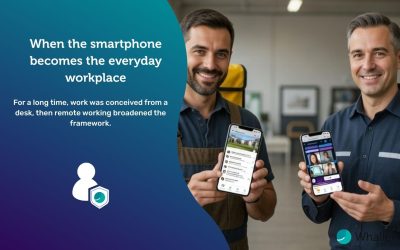
For a long time, work was conceived from a desk, then remote working broadened the framework. But one reality, more discreet yet widespread, never disappeared: that of women and men who work in the field. Craftspeople, drivers, maintenance staff, skilled workers,...
Digital transformation
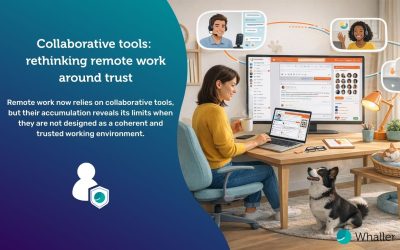
Collaborative tools: rethinking remote work around trust
Remote work now relies on collaborative tools, but their accumulation reveals its limits when they are not designed as a coherent and trusted working environment. Remote work has taken hold quietly. It was not announced as a revolution; it simply became established...
Right to Disconnect in the Hybrid Workplace: Balancing Digital Collaboration and Life Boundaries
Hybrid working, instant messaging and all-in-one collaboration tools have blurred the line between work and personal life across the United Kingdom. With notifications competing for attention at all hours and teams operating asynchronously, the "always-on" culture has...
AI-Augmented Digital Workplaces: Whaller’s Vision
Digital collaboration tools are experiencing a new acceleration driven by artificial intelligence (AI). After the era of intranets and enterprise social networks, the focus has shifted to unified digital workplaces, enhanced by intelligent agents capable of supporting...
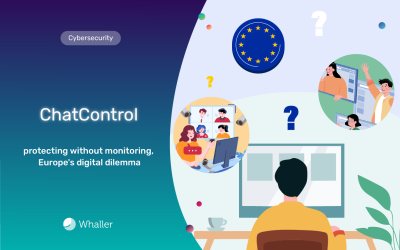
ChatControl: protecting without monitoring, Europe’s digital dilemma
A divisive project In 2025, the draft European regulation ChatControl (or CSAR) is sparking debates and concerns. Presented as a response to the fight against online child abuse, it aims to force messaging and collaboration platforms to implement automatic...
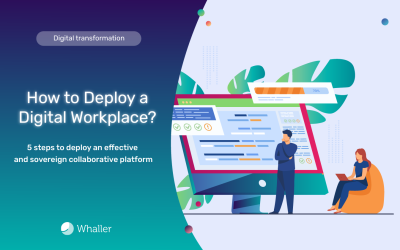
How to Deploy a Digital Workplace?
5 steps to deploy an effective and sovereign collaborative platform Today, many organisations—both public and private—know they need to modernise their work environment… but aren’t always sure where to begin. A Digital Workplace isn’t just a trend or software...